Find Your Unstable Sleep Layer
Answer a few questions to see whether your night is mainly affected by environment, body temperature, contact surface, mental transition, or stimulus load.
Takes about 60 seconds. No account required.
You will get:
- Main problem layers (five layers)
- Recommended 1-2 Setups
- Next specific actions
How the assessment works
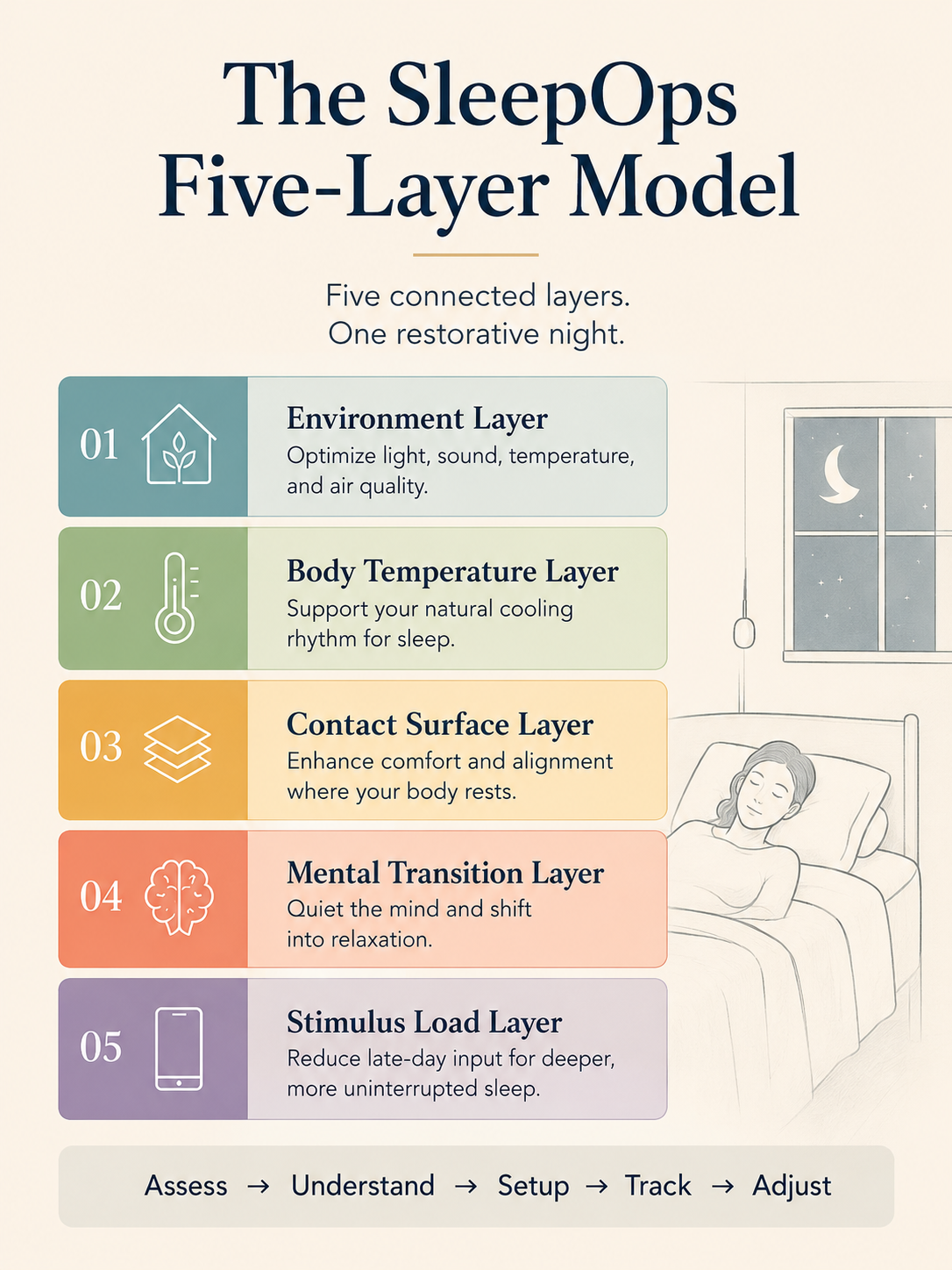
The SleepOps assessment reviews your current sleep friction across five practical layers: body temperature, sleep environment, contact surface, mental transition, and stimulus load.
What the five layers mean
Each layer describes a condition that can make sleep feel stable or unstable before bedtime. The goal is to identify which layer is most likely creating friction tonight.
What result you will get
After answering the questions, you receive your main problem layers, a short interpretation, and recommended SleepOps setups to try next.
Why taking it helps
Instead of guessing from scattered sleep tips, the assessment gives you a structured starting point for choosing guides, setups, and tracking actions.
Free users get 10 assessments
You can use the free assessment up to 10 times in your session. Paid plans are designed for ongoing tracking, dashboard history, and weekly suggestions.
Example result
A typical result may identify Body Temperature as the main layer and Mental Transition as a secondary layer, then recommend a practical setup such as a pre-sleep warmth routine.
- Main layer: Body Temperature
- Secondary layer: Mental Transition
- Recommended setup: Winter Cold Feet Sleep Setup
- Next action: warm feet gently before bed and avoid high-intensity heat during sleep.
Privacy note
Free assessment use is linked to an anonymous browser ID so SleepOps can count submissions and show recent results without requiring an account in v1.
Medical boundary
SleepOps is for informational sleep environment and habit guidance. It does not diagnose, treat, or replace qualified medical care.
What happens after you submit?
You receive layer scores, a short interpretation, recommended guides or setups, and a dashboard path for tracking changes over time.
When should you seek help?
If sleep problems are severe, persistent, linked to breathing symptoms, chest symptoms, depression, severe anxiety, or other health concerns, seek qualified medical care.
Assessment FAQ
Do I need an account?
No. The free assessment works without account registration in the current version.
Can I retake it?
Yes. Retaking the assessment can help compare different nights, seasons, or routines within the free limit.
What does a paid plan add?
Paid plans are designed for ongoing tracking, dashboard history, weekly suggestions, and repeated assessment patterns.
Is this medical advice?
No. SleepOps focuses on sleep stability signals, comfort, environment, and habits, not medical diagnosis or treatment.
Loading assessment...