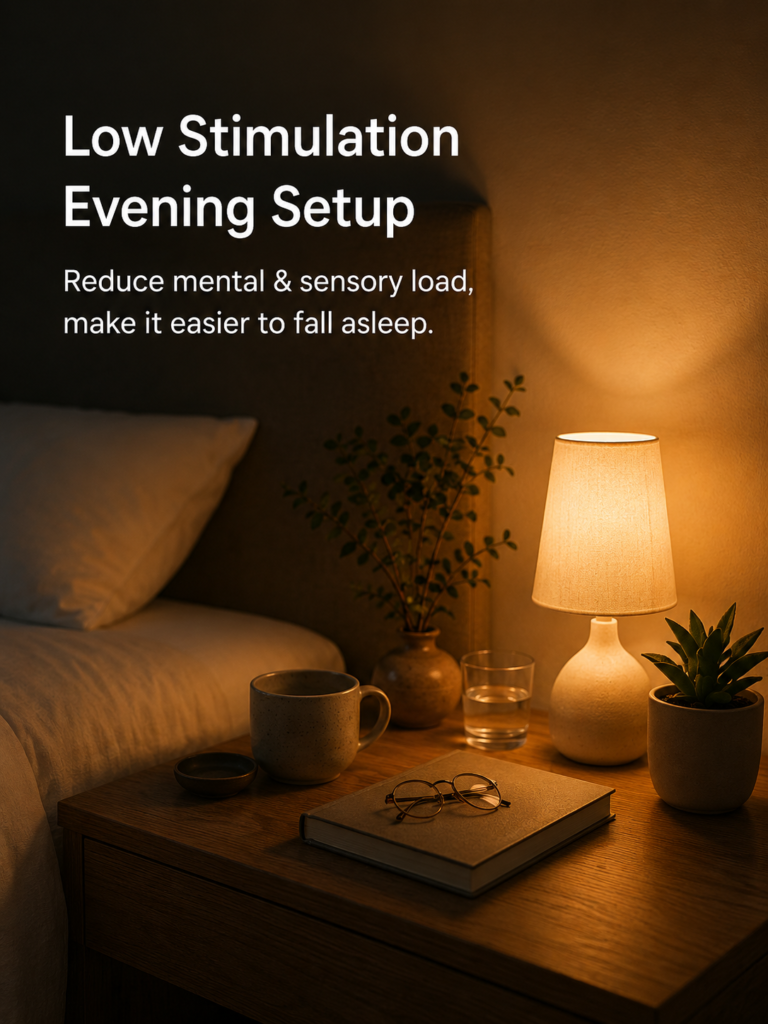
Pre-Sleep Contact Layer Optimization | Enter Nighttime State with Safer Contact Materials
Without increasing stimulation, help the body enter a relaxed state more naturally by optimizing materials and sequence of nighttime skin contact.
Core Principles
- Contact over stimulation
- Stability over intensity
- Natural materials are easier to ignore
Face and Hand Contact Layer
After cleansing, skin is more sensitive, and contact materials are perceived more intensely. Stable, non-irritating materials are more conducive to nighttime relaxation.
Recommended Devices
Things to Avoid
- Strongly scented fabrics
- Rough and hard fibers
- Bright or heavily dyed fabrics
Coverage Area
- Skin contact layer
Usage Timing
- Bedtime transition
Foot Nighttime Wrapping Layer
Feet are the area most prone to tossing due to cold or tactile discomfort at night. Stable wrapping sensation is more important than temporary stimulation.
Recommended Devices
Things to Avoid
- Tight cuffs
- Socks with high synthetic fiber content
- Strongly heating socks
Safety Tips
- avoid_strong_heating_socks_overnight
- avoid_tight_cuff
Coverage Area
- Feet
- Lower legs
Usage Timing
- Overnight (during sleep)
Bed Surface Base Contact Layer
The bed surface is the area with the longest contact time at night. Stable, slow physical sensations are more suitable for all-night use.
Recommended Devices
Things to Avoid
- Electric heating mattresses
- Strongly stimulating materials
- Overly thick padding that affects turning
Safety Tips
- passive_layer_only
- avoid_electric_pad
Coverage Area
- Bed surface layer
Usage Timing
- Overnight (during sleep)
Are you following this setup?
This setup supports
Want to track whether this setup fits your sleep pattern?
Basic gives you unlimited assessments, layer tracking, and weekly setup suggestions.