Stimulus Load & Information Input | Pre-Sleep Input Reduction Solution
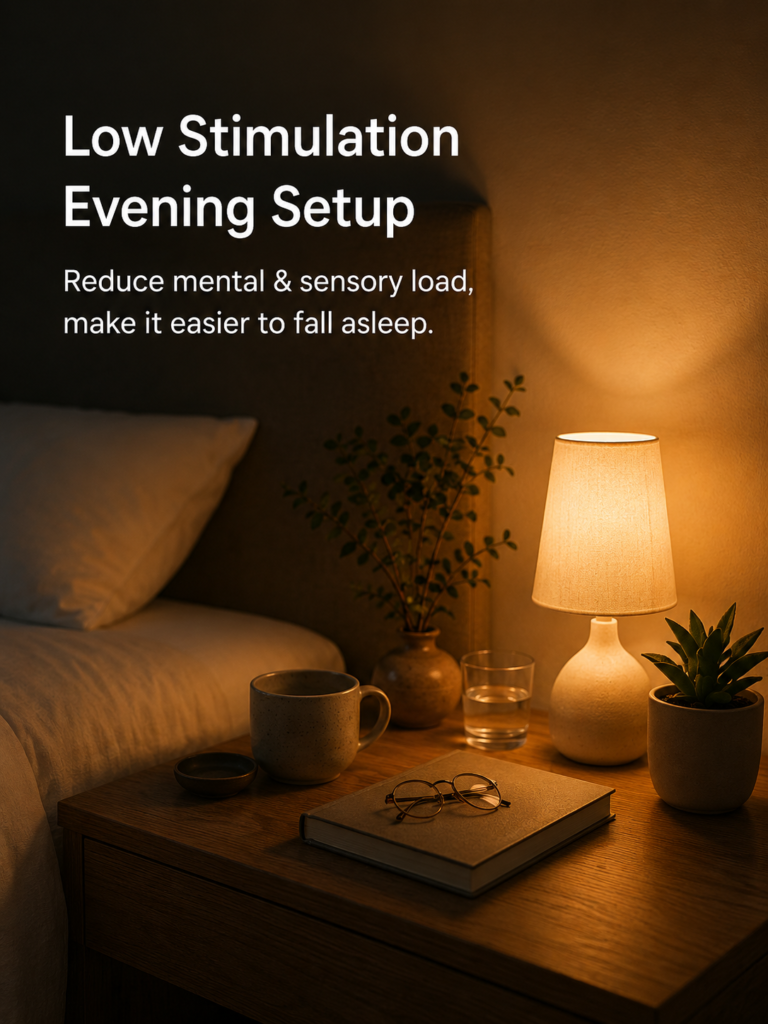
Help the brain switch from 'input mode' to 'relaxation mode' by setting an information cutoff time and establishing a no-new-stimulation window.
Core Principles
- Information input needs a cutoff point
- No new stimulation in the pre-sleep window
- Use low-burden, one-direction calming activities to transition
Input Cutoff
Continuous scrolling and information intake keeps the brain in 'receive mode', making it harder to transition to sleep preparation.
Usage Method
- Set a fixed cutoff time to stop checking new information
- Do not open social, news, or work content 30–45 minutes before sleep
Things to Avoid
- Continuing to scroll after lying down
- Checking email at the last moment before sleep
Usage Timing
- Bedtime transition
Low-Friction Wind-Down
No need for a 'perfect ritual'; simple, easy-to-execute transitions are easier to maintain.
Usage Method
- Choose 1–2 fixed actions as pre-sleep signals
- E.g. foot soak, tidying bedding, light touch of familiar materials
Recommended Devices
Things to Avoid
- Using phone while doing the routine
- Changing the routine every night
Safety Tips
- avoid_new_stimulus
Coverage Area
- Feet
- Skin contact layer
Usage Timing
- Bedtime transition
- Right before sleep
Low-Demand Sensory Transition
Tired eyes do not mean the brain is ready for sleep; transition from 'high-demand senses' to 'low-demand senses' is needed.
Usage Method
- Reduce visual and cognitive load before sleep
- Add tactile or olfactory anchors with low cognitive load
Recommended Devices
Things to Avoid
- Heavy reading of complex content before sleep
- Bright lights or rapid screen changes
Safety Tips
- low_intensity_only
Coverage Area
- Scent environment
- Skin contact layer
Usage Timing
- Bedtime transition
No New Stimulation Window
New information or visuals put the brain back into processing mode and interrupt the relaxation process.
Usage Method
- Avoid making new decisions or opening new links in the pre-sleep window
- Repeat familiar low-stimulation activities
Things to Avoid
- Watching new shows or videos before sleep
- Suddenly searching for information
Usage Timing
- Bedtime transition
One-Direction Calming Activities
One-direction input (e.g. listening to familiar audio, light touch) helps the brain slow down more than two-way interaction (chatting, commenting).
Usage Method
- Choose activities that require no reply and no new information
- E.g. listen to a fixed podcast, lightly touch familiar materials
Recommended Devices
Things to Avoid
- Group chat before sleep
- Scrolling through comments
Safety Tips
- low_intensity_only
Coverage Area
- Skin contact layer
- Scent environment
Usage Timing
- Bedtime transition
Completion Check
- Is information cutoff time set
- Is new stimulation avoided in the pre-sleep window
- Are low-burden activities used for transition
This solution is oriented towards habits and experience
Not related to psychological or medical intervention
Are you following this setup?
This setup supports
Want to track whether this setup fits your sleep pattern?
Basic gives you unlimited assessments, layer tracking, and weekly setup suggestions.