
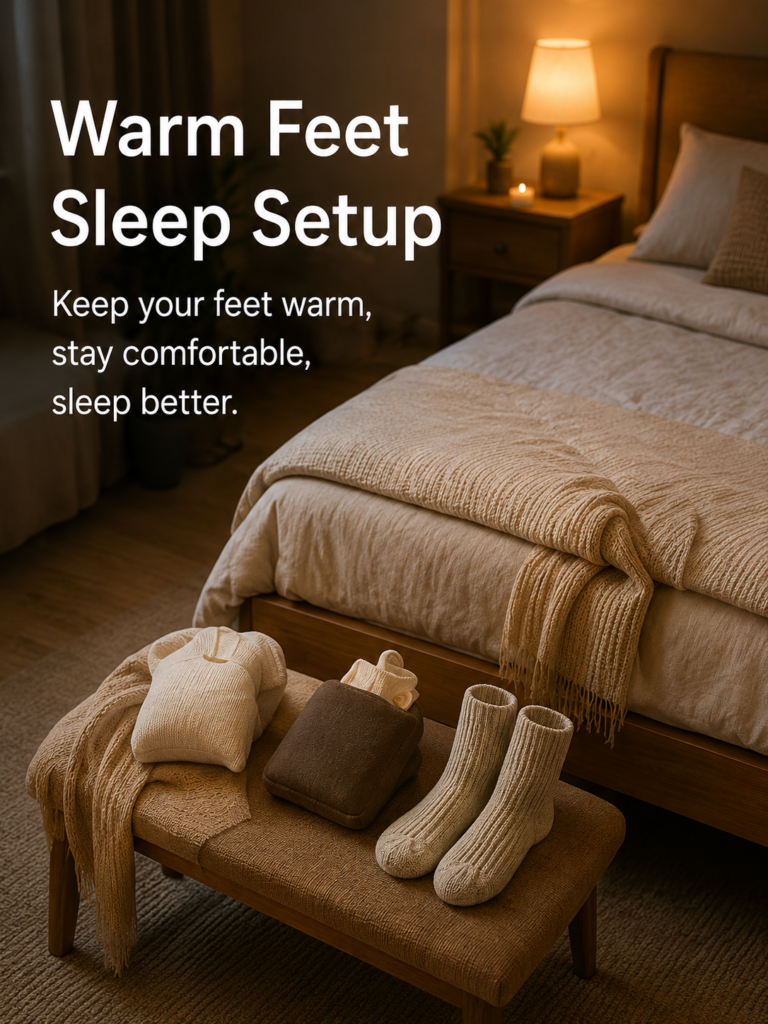
Winter Cold Feet & Hands | Pre-Sleep Warmth Comfort Solution
During cold seasons, help the body gradually enter a relaxed nighttime state through stable, non-excessive warm stimulation.
Core Principles
- Warmth should be stable, not hotter is better
- Start with feet and body contact surfaces first
- Reduce strong stimulation before sleep
Foot Warmth Activation
Feet are one of the areas most prone to cold at night. Stable warmth helps reduce discomfort.
Usage Method
- Start preparing 30–45 minutes before sleep
- Foot soak or wear warm items for 15–20 minutes
- Keep feet dry and warm after finishing
Recommended Devices
Things to Avoid
- Excessively hot water or prolonged soaking
- Strong stimulation right before sleep
Safety Tips
- Aim for comfortable stability, not maximum heat. Stop if uncomfortable.
- Foot soaking is a pre-sleep transition; keep it around 15–20 minutes.
- Use only pre-sleep; do not run during sleep.
Coverage Area
- Feet
Usage Timing
- Right before sleep
Temperature Stability of Body Contact Surface
When the temperature of the body-bed contact surface is insufficient, it's easy to feel cold even when covered.
Usage Method
- Ensure mattress or bedding has basic warmth on cold nights
- Avoid sudden body temperature drop before sleep
Recommended Devices
Things to Avoid
- Thick but cold bedding
- Heating methods that fluctuate between hot and cold
Safety Tips
- For general cold sensitivity, passive warmth (socks/bedding) is often safer and more stable.
- Avoid overnight use of active heating pads; if used, strictly time-limit and keep controllable.
Coverage Area
- Bed surface layer
Usage Timing
- Overnight (during sleep)
Local Joint Warmth
Areas like knees are easily exposed to cold air. Local warmth can improve overall comfort.
Usage Method
- Use when feeling noticeably cold
- Only for static relaxation scenarios
Recommended Devices
Things to Avoid
- Long-term unsupervised use
- Continuous heating during sleep
Safety Tips
- Use pre-sleep only; do not continue after falling asleep.
- Those with reduced heat sensitivity or special conditions should use with supervision.
- Start with low settings and short time; increase gradually.
Coverage Area
- Lower legs
- Knees
- Thighs
Usage Timing
- Right before sleep
Completion Check
- Are feet kept warm
- Is body contact surface not cold
- Is excessive stimulation avoided
This solution is oriented towards comfort experience
Not medical or treatment advice
Are you following this setup?
This setup supports
Want to track whether this setup fits your sleep pattern?
Basic gives you unlimited assessments, layer tracking, and weekly setup suggestions.