
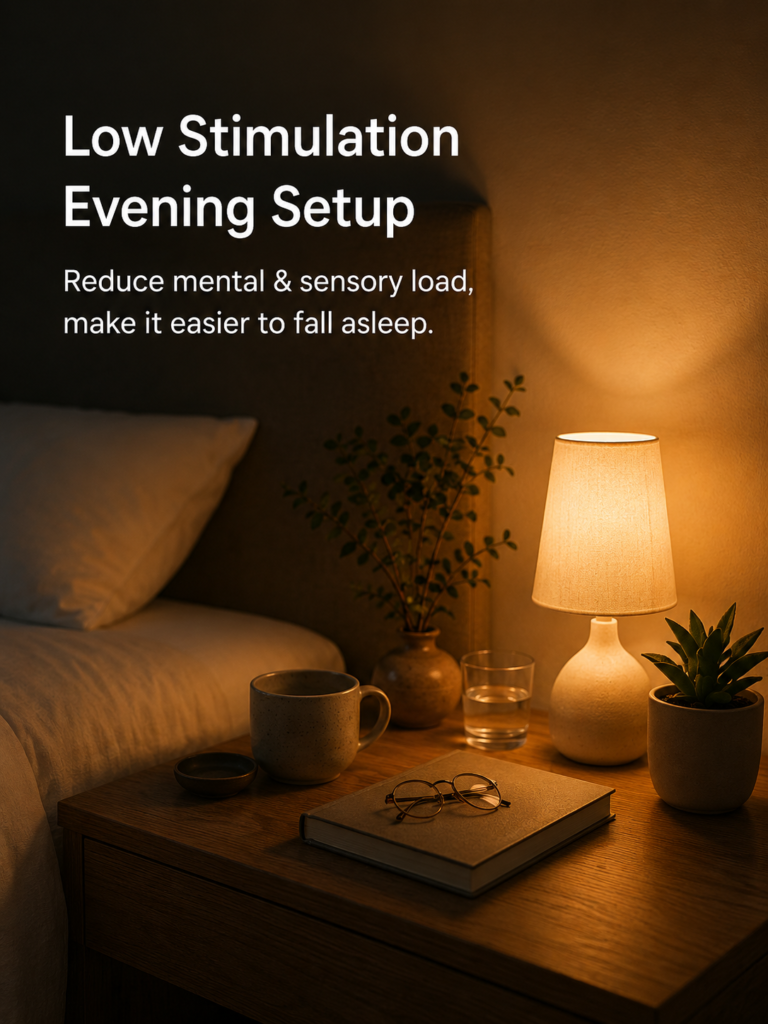
Room Safety & Quiet | Bedroom State Preparation Solution
Help the bedroom environment become more conducive to relaxation and sleep by reducing sudden sounds, simplifying the visual field, and establishing a familiar fixed sleep corner.
Core Principles
- Reduce sudden sound interruptions
- Keep the visual field simple
- Maintain familiarity and stability of the sleep corner
Reduce Sudden Sounds
Sudden noises keep light sleepers alert and make it harder to reach deep relaxation.
Usage Method
- Check doors, windows, and appliances before sleep for potential sudden sounds
- Keep noise-making items away from the bedside
Things to Avoid
- Dealing with noise-making items right before sleep
- Alarms or reminder sounds left on
Usage Timing
- Bedtime transition
- Overnight (during sleep)
Familiar Fixed Sleep Corner
Familiar touch and scent help the brain recognize a 'safe, relaxable' environment.
Usage Method
- Keep bedding and body-contact items consistent
- Optional: mild scent anchor for familiarity
Recommended Devices
Things to Avoid
- Frequent bedding or scent changes
- Sudden contact with unfamiliar materials
Safety Tips
- low_intensity_only
Coverage Area
- Skin contact layer
- Scent environment
Usage Timing
- Bedtime transition
- Overnight (during sleep)
Soften Night-Time Transitions
Smoother transition from activity area to sleep area makes it easier to enter a relaxed state.
Usage Method
- Gradually reduce activity intensity within 30 minutes before sleep
- Finish screen and information input before entering the bedroom
Things to Avoid
- Continuing to use phone after lying down
- Abruptly turning off lights and sounds
Usage Timing
- Bedtime transition
Simplify Visual Field
Clutter or changing elements in the visual field increase mental load and affect relaxation.
Usage Method
- Put away clutter in the line of sight before sleep
- Keep bedroom walls and headboard area simple
Things to Avoid
- Lit screens facing the bed
- Frequently moving items before sleep
Usage Timing
- Bedtime transition
Predictable Room State
Predictable room state before sleep reduces vigilance from uncertainty.
Usage Method
- Check the room in a similar way before sleep each night
- Keep temperature, lighting, etc. roughly consistent
Things to Avoid
- Major room layout changes before sleep
- Flickering or inconsistent lighting
Usage Timing
- Bedtime transition
Completion Check
- Are sudden sounds reduced
- Is the visual field simple
- Is the sleep corner familiar and predictable
This solution is oriented towards environment preparation
Not medical or treatment advice
Are you following this setup?
This setup supports
Want to track whether this setup fits your sleep pattern?
Basic gives you unlimited assessments, layer tracking, and weekly setup suggestions.