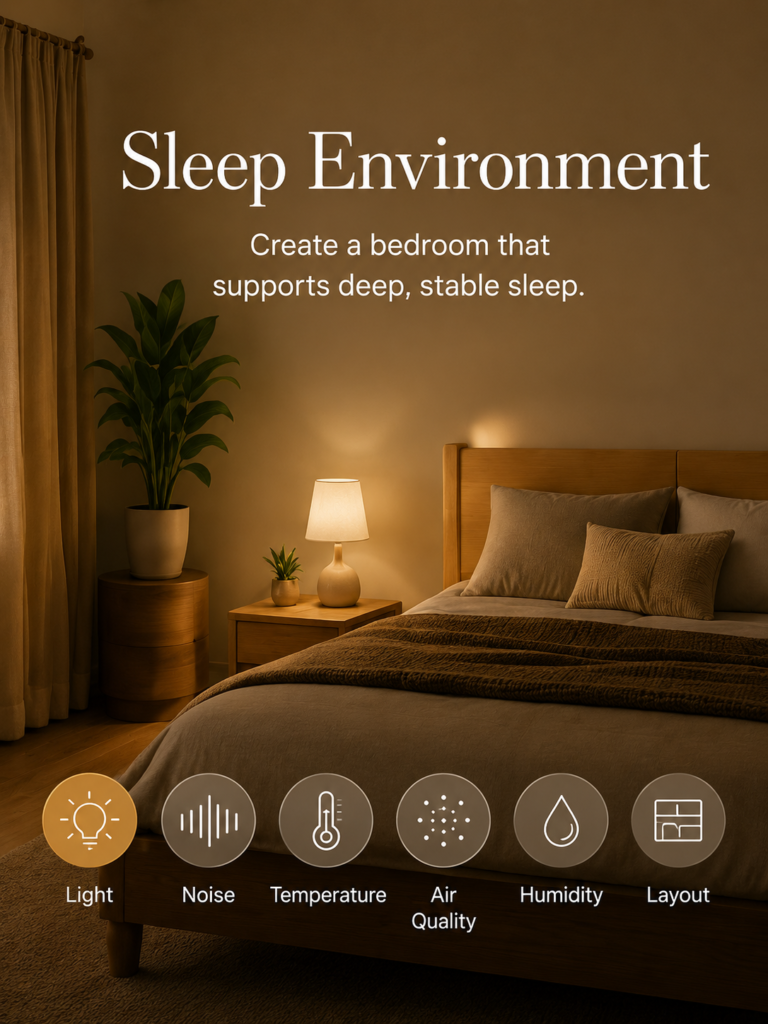
What this layer means
The Sleep Environment layer covers the external conditions that tell a sensitive sleeper whether the room is quiet, familiar, safe, and easy to ignore. It includes sudden sounds, visual clutter, unfamiliar rooms, light changes, and objects that keep attention active.
This layer is not about building a perfect bedroom. It is about treating the bedroom as recovery infrastructure: a place where light, sound, air, temperature, layout, and device placement reduce friction instead of asking for more decisions.
For SleepOps outreach, this is the clearest healthy-home angle. The bedroom is not decoration; it is the nightly environment that either protects recovery or keeps the nervous system scanning for changes.
What to try tonight
Do a short room reset before the final wind-down window: remove obvious visual triggers, silence avoidable alerts, check one or two safety items, and stop rechecking once the reset is complete.
If noise is the issue, focus first on sudden sound sources near the bed. Predictable background sound is often less disruptive than a single unexpected alert, click, or vibration.
What to stabilize this week
Keep a consistent sleep corner and repeat the same room reset sequence. Sensitive sleepers often benefit from familiarity more than from constant optimization.
When testing changes, adjust one environmental variable at a time: light, sound, object placement, or pre-bed checking. This makes it easier to see which change actually reduces alertness.