
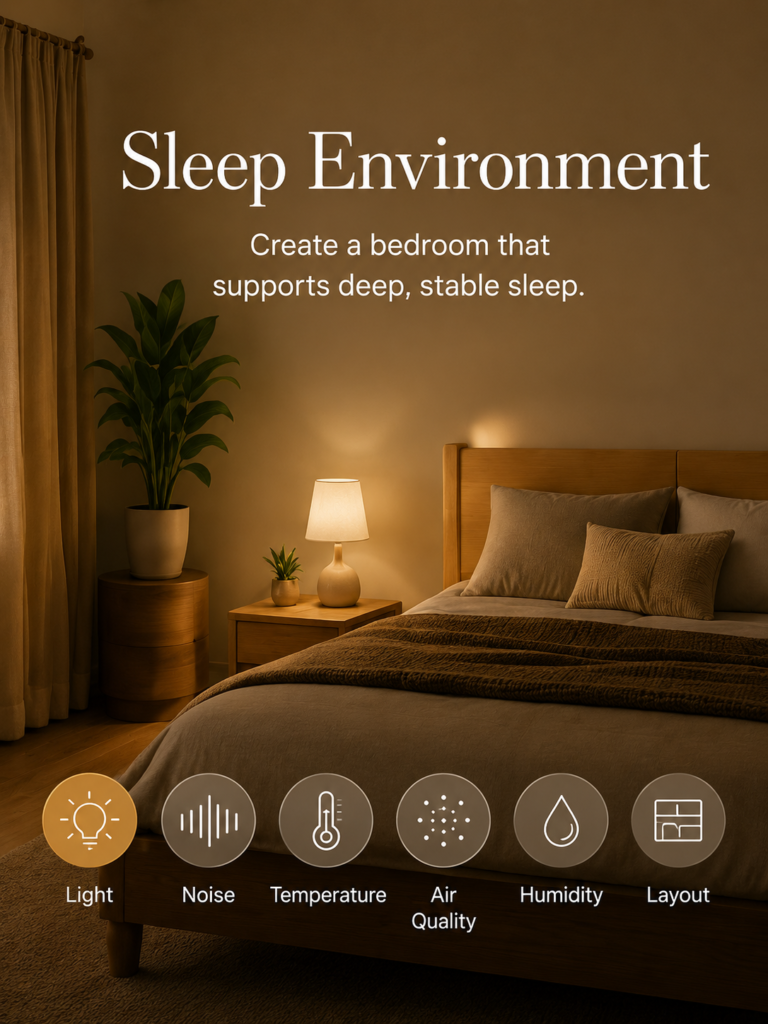
Why Unfamiliar Rooms Feel Harder To Sleep In
TL;DR
Sleeping poorly in a new place is so common that researchers have a name for it: the first-night effect. The brain keeps one hemisphere slightly more alert in unfamiliar environments, scanning for potential threats. Bringing familiar sensory cues, like a known scent or a personal towel, can reduce this effect. The discomfort usually fades by the second or third night as the brain learns the new space is safe.
SleepOps Summary
- Main layer
- Sleep Environment
- Common trigger
- Difficulty Falling Asleep, Restless Sleep
- What to try tonight
- Bring a scent anchor: pack a [sandalwood scent anchor](/device/sandalwood-scent-anchor) when traveling. Use it during your wind-down, just as you would at home. The familiar smell tells the brain: this part is normal.
- What to track this week
- track whether the Sleep Environment signal improves or repeats across the next few nights.
- When to seek medical help
- seek qualified care if symptoms are severe, persistent, painful, one-sided, linked to breathing symptoms, chest symptoms, severe anxiety, depression, or other health concerns.
Related setups
Short Answer
Unfamiliar rooms feel harder to sleep in because the brain treats a new environment as potentially unsafe. It keeps part of itself on alert, monitoring sounds, smells, and spatial layout that it has not yet learned to trust. Bringing a familiar sensory anchor, such as a sandalwood scent anchor or an undyed cotton towel, gives the brain something it recognizes and can reduce the time it takes to settle.
What People Notice
- Taking longer to fall asleep the first night in a hotel, a guest room, or a new apartment.
- Waking up more often during the night, sometimes from very small sounds.
- A vague sense of alertness that has nothing to do with stress or caffeine.
- Feeling less rested the next morning, even if the actual hours of sleep were similar.
Problem Context
For many people, this is one of those small details that never quite makes sense. You are exhausted from traveling. The hotel room is quiet, the bed is comfortable, and yet you lie awake longer than usual. You turn over. The pillow smells different. The air moves differently. There is a faint hum from the hallway that you cannot quite identify. None of it is alarming. But your body does not fully relax. By the second night, it is better. By the third, you barely notice.
Why It Happens
- Unfamiliar sounds: the brain flags any sound it has not heard before in this specific context.
- Unfamiliar smells and textures: hotel sheets, different laundry detergent, an unfamiliar pillow shape. These are all signals that say "this is not your usual place."
SleepOps Explanation
From a SleepOps perspective, sleep comfort depends on stability layers: environment, body state, contact surface, and mental readiness. Unfamiliar rooms disrupt the environment layer and, through it, the mental layer. The brain cannot fully transition into deep sleep if it has not finished mapping the new environment. Every unfamiliar sound or texture creates a small evaluation loop: is this safe? This loop does not prevent sleep, but it reduces depth and increases the number of brief awakenings. The practical fix is to reduce novelty. Bring something the brain already knows. A familiar scent, a personal pillowcase, or a towel you use at home can act as a bridge between "new room" and "safe enough to sleep."
Practical Fixes
- Bring a scent anchor: pack a sandalwood scent anchor when traveling. Use it during your wind-down, just as you would at home. The familiar smell tells the brain: this part is normal.
- Bring a personal towel or cloth: an undyed cotton towel from home provides a familiar texture near the face. It also carries the scent of your usual detergent.
- Arrive early if possible: spending a few waking hours in the room before bedtime gives the brain time to catalog the baseline sounds and layout.
- Keep your bedtime routine: do the same wind-down steps you do at home. The routine itself is a familiarity signal.
- Mask unpredictable sounds: use a white noise app or a fan to create a steady baseline that covers hallway noise, elevator sounds, or street traffic.
Recommended Setup and Related Reading
For a structured approach to sleep environment comfort, see the sleep-safe quiet room setup.
Related guides:
Common Misunderstandings
- "I should be able to sleep anywhere if I am tired enough." Fatigue helps, but the first-night effect operates below conscious control. Being tired does not override the brain's security scan.
- "It is just anxiety about travel." For some people it is. But many calm, relaxed travelers still experience it. The effect is biological, not purely psychological.
- "A better hotel room will fix it." Comfort matters, but the issue is familiarity, not luxury. A familiar budget room beats an unfamiliar five-star suite for sleep quality on night one.
Recommended devices
FAQ
Does the first-night effect happen every time I travel?
For most people, yes, to some degree. It tends to be stronger in very different environments (a noisy city hotel vs. your quiet suburb) and weaker when the new room is similar to your usual setup.
Can I train myself to sleep better in new places?
Frequent travelers often report that the effect weakens over time. Using consistent sensory anchors (same scent, same travel pillow, same routine) accelerates this adaptation.
Why do I sleep fine at a friend's house but not in a hotel?
Familiarity is the key factor. If you have stayed at your friend's place before, the brain has already mapped that environment. A brand-new hotel room has zero baseline data.
Is this related to jet lag?
They are separate issues. Jet lag is about circadian rhythm disruption from time zone changes. The first-night effect is about environmental unfamiliarity. You can experience one without the other, but travel often triggers both at once.
Research Note
The first-night effect has been documented in sleep research for decades. A 2016 study using neuroimaging found that during the first night in a new environment, the left brain hemisphere showed greater responsiveness to external sounds than the right, suggesting an asymmetric vigilance pattern. This effect diminished by the second night. Earlier polysomnography studies also found reduced slow-wave sleep and more frequent awakenings on the first night in a sleep lab, consistent with the brain maintaining a higher level of environmental monitoring.
Related SleepOps Layer
Not sure which layer is affecting your sleep most?
Take the free Sleep Stability Assessment and get a recommended setup based on your current night pattern.