
Why Bedtime Rituals Help You Fall Asleep
TL;DR
A short, repeated sequence of calm actions before bed helps the brain recognize that the day is ending. The ritual does not need to be long or elaborate. Three to four simple steps in the same order is enough. Sensory anchors like a familiar scent or a soft texture strengthen the signal. Consistency matters more than perfection. Most nights is enough.
SleepOps Summary
- Main layer
- Mental Transition
- Common trigger
- Difficulty Falling Asleep
- What to try tonight
- Scent + breathing: Place a [sandalwood scent anchor](/device/sandalwood-scent-anchor) on the nightstand. Take three slow breaths with it before lying down.
- What to track this week
- track whether the Mental Transition signal improves or repeats across the next few nights.
- When to seek medical help
- seek qualified care if symptoms are severe, persistent, painful, one-sided, linked to breathing symptoms, chest symptoms, severe anxiety, depression, or other health concerns.
Related setups
Short Answer
Bedtime rituals help because repetition builds a pattern the brain learns to follow. When the same calm actions happen in the same order each night, the mind begins to associate that sequence with sleep. Over time, the ritual becomes a quiet shortcut from "still thinking" to "ready to rest."
Real-life Scenario
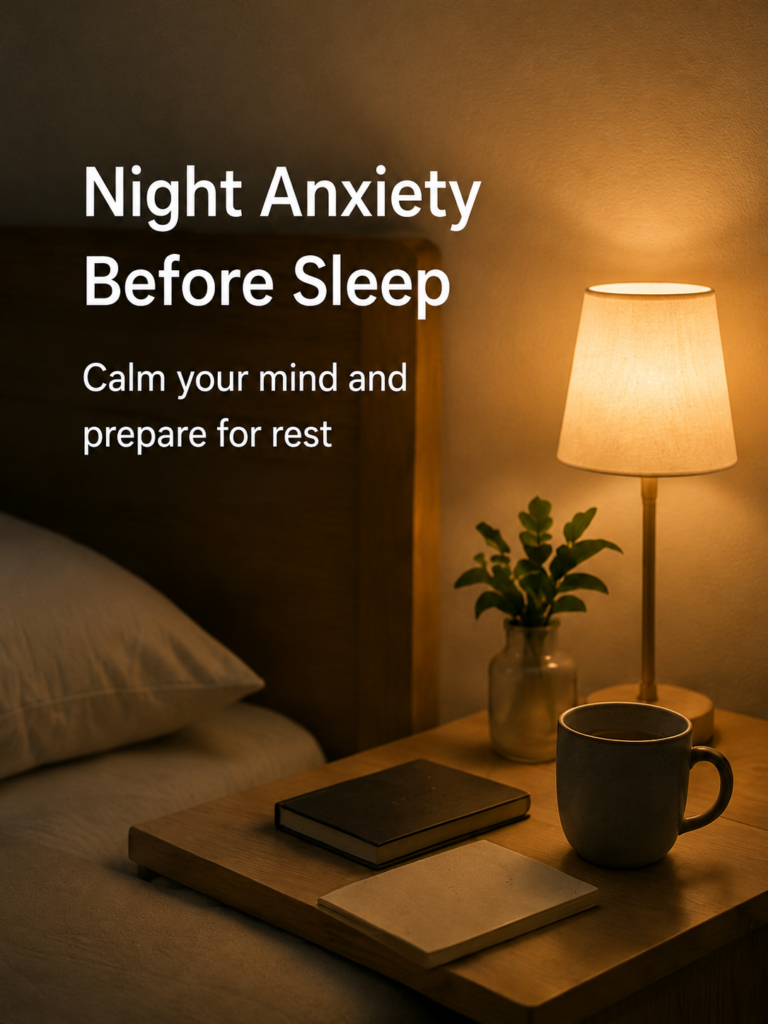
You finish brushing your teeth. You dim the light in the bedroom. You sit on the edge of the bed for a moment, hold an undyed cotton towel against your chest, and take a few slow breaths with a familiar scent nearby.
Nothing dramatic happens. But something shifts. The mind slows a little. The day starts to feel further away.
That is the ritual doing its job.
What's Actually Happening
A ritual works because the brain treats it as a cue. But cues only work when they are consistent.
If you change the order every night, or skip it most nights, the brain does not have enough data to build the association. It stays in guessing mode.
A few practical rules:
- Do the same steps in the same order. - Keep it short enough that you will actually do it on tired nights. - If you miss a night, do a shortened version instead of skipping entirely. - Protect the ritual from daytime use. If you use the same scent while working, it loses its evening meaning.
SleepOps Explanation
From a SleepOps perspective, sleep comfort depends on several stability layers: environment, body state, contact surface, and mental transition. A bedtime ritual primarily supports the mental transition layer. The ritual does not change room temperature or bedding. It changes the brain's readiness. By providing a stable, low-stimulation sequence, it helps the mind move from scattered attention toward rest. The sensory components, such as a familiar scent or a soft texture, make that transition easier to recognize. The simpler and more repeatable the ritual, the stronger the cue becomes over time.
Practical Fixes
- Scent + breathing: Place a sandalwood scent anchor on the nightstand. Take three slow breaths with it before lying down.
- Touch + stillness: Hold an undyed cotton towel against your chest or lap for a minute. Focus on the texture.
- Dim + quiet: Turn off overhead lights 15 minutes before bed. Sit or read in low light without screens.
- Fixed order: Brush teeth, change clothes, dim lights, sit quietly for two minutes. The order is what matters, not the activities.
Recommended Setup and Related Reading
For a ready-made structure, see the bedtime calming ritual setup.
Related guides:
Recommended devices
FAQ
How long does a bedtime ritual need to be?
Three to ten minutes is usually enough. The point is not duration but repetition. A short ritual you do every night beats a long one you skip half the time.
What if I travel and cannot do my usual routine?
Bring one element with you. A familiar scent or a small towel can carry the cue even if the room and schedule are different. The brain responds to the anchor, not the full setting.
Can a ritual replace good sleep hygiene?
No. A ritual supports the transition into sleep, but it does not fix problems like caffeine late in the day, an uncomfortable mattress, or a noisy room. It works best as one piece of a broader setup.
What if the ritual stops working after a while?
Rituals can lose effect if they become rushed or automatic. Slow down and pay attention to the sensory details again. If you have been doing the same steps for months and they feel stale, swap one element while keeping the rest.
Research Note
Research on bedtime routines consistently shows that a predictable pre-sleep sequence is associated with shorter time to fall asleep and better sleep quality, particularly in adults who report difficulty winding down. Studies on conditioned cues also suggest that pairing a specific sensory signal with a relaxed state can make that state easier to reach over time. The effect is modest but reliable, and it strengthens with repetition.
Related SleepOps Layer
Use the AI-Age Evening Shutdown Checklist
Turn this guide into a practical shutdown ritual for closing inputs, reducing late-day stimulation, and rebuilding night order.
Not sure which layer is affecting your sleep most?
Take the free Sleep Stability Assessment and get a recommended setup based on your current night pattern.